
Operational Efficiency Consulting for SMEs
We provide operational efficiency consulting to UK businesses that are generating revenue but losing too much of it to avoidable process waste, structural inefficiencies, and systems built for an earlier stage of the business. Our role is to identify exactly where operational costs are higher than they should be, where delivery is slower than it needs to be, and where capable people are spending time on work that should be automated, restructured, or eliminated.
Operational inefficiency is one of the most expensive and least visible problems in a growing business. It does not announce itself; it accumulates. Approval processes that take three weeks because nobody redesigned them. Supplier agreements signed years ago and never renegotiated. Reporting tasks consuming a senior employee's Monday morning every week. Inventory is tying up cash that could be deployed elsewhere.
Every £1 saved through operational improvement flows directly into net profit, with no additional cost of sale, marketing spend, or customer acquisition cost. For a business operating on a 15% net margin, £50,000 of operational savings delivers the same bottom-line impact as £333,000 of new revenue. Across our consulting clients, the average margin improvement is 27%.
Book a free 60-minute Efficiency Assessment. We will map your core workflows, identify the three most significant operational constraints, and calculate an estimated cost saving from addressing them. No obligation.
Who Delivers This Service
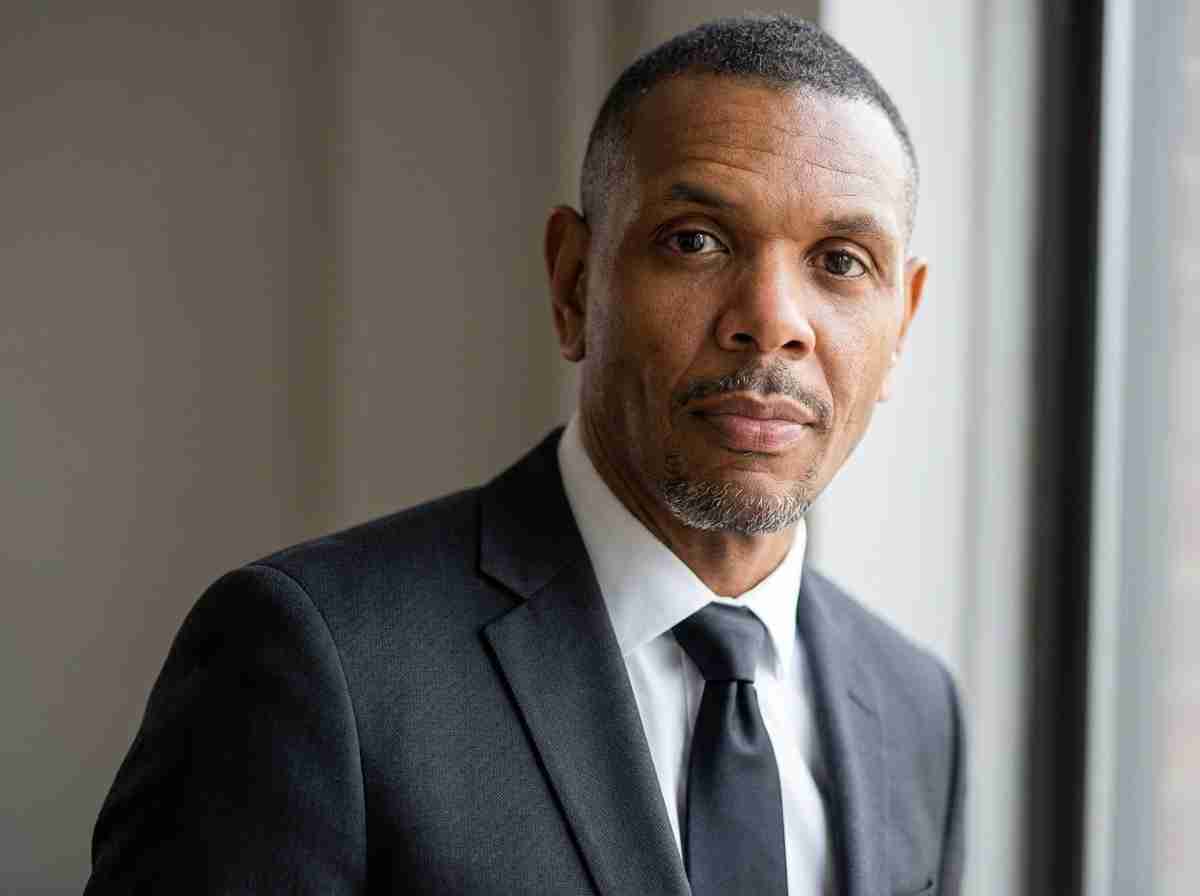
Your operational efficiency work will be led by Kurt Graver — Accountant, MBA, Founder of SGI Consultants — supported by a qualified team with expertise in process analysis, cost reduction, and scalability design. Kurt personally oversees every efficiency engagement. His clients achieve an average 27% profitability improvement through systematic operational redesign.
Operational Efficiency Consulting: Our Track Record
Years of Consulting Experience
UK Businesses Supported
Client Funding Rate
Average Net Margin Increase
Why Operational Inefficiency Is a Bigger Problem Than Most Businesses Realise
Operational inefficiency is one of the most expensive and least visible problems in a growing UK business. It does not announce itself. It accumulates -- in approval processes that take three weeks because nobody ever redesigned them, in supplier agreements that were signed years ago and never renegotiated, in reporting tasks that consume a senior employee's Monday morning every single week, in inventory that ties up cash that could be deployed elsewhere.
The businesses that feel this most acutely are those that are growing. Growth amplifies operational inefficiency. A process that is merely inconvenient at one level of volume becomes a serious constraint at twice that volume and a crisis at four times that volume. The ceiling on sustainable growth is almost always operational before it is commercial.
There is also a profitability dimension that is frequently overlooked. Every £1 saved through operational improvement flows directly to net profit—with no additional cost of sale, no marketing spend, and no customer acquisition cost. For a business operating on a 15% net margin, £50,000 of operational savings delivers the same bottom-line impact as £333,000 of new revenue. Operational efficiency is not a secondary priority to growth. For most UK SMEs, it is the highest-return activity available.
The solution is not to work harder, hire more people, or invest in more technology. It is redesigning the systems so that the capabilities you already have produce the results they should.
SGI's Approach: Engine Optimisation
Our operational efficiency consulting is grounded in SGI's Engine Optimisation framework -- a structured methodology for identifying and removing the constraints that prevent a business from converting its inputs into outputs at the rate and margin it should.
The Engine Optimisation approach begins with a diagnostic that maps the complete operational system of the business -- from customer order through delivery, from procurement through production, from recruitment through output. This diagnostic identifies where the primary constraint lies: the single point in the system that is limiting the performance of everything downstream.
This matters because operational improvement investment directed at non-constraints produces almost no measurable benefit. The business that invests in automating a process that is not the binding constraint, or recruits into a function with excess capacity, is spending money without removing the performance limit. Engine Optimisation ensures that every intervention is directed at the constraint that is actually limiting the system.
Our operational work also connects to the Business Success Formula -- specifically the Sustainability dimension, which assesses whether a business can defend and grow its competitive position over time. Operational excellence is one of the most durable competitive advantages available to a UK SME. Cost structures and delivery capabilities that competitors cannot easily replicate create moats that pricing and marketing alone never will.
Comprehensive Operational Efficiency Services
Our operational efficiency consulting practice addresses every dimension of how your business runs -- from the workflows your team follows every day to the structure of your supply chain, the automation potential in your technology stack, and the management layers that either accelerate or slow decision-making.
We do not produce recommendations and walk away. We work with your team throughout implementation, manage the change process, and measure improvement with the same discipline we apply to diagnosis.
Process Optimisation & Workflow Redesign
The Objective: Eliminate the waste that has accumulated in your core workflows and replace it with processes designed for your business's current size and complexity.
Most UK business processes were not designed -- they evolved. A step was added to fix a problem. A workaround became standard practice. An approval gate was introduced after a mistake and was never removed once the risk had passed. The cumulative result is workflows with unnecessary handoffs, approval bottlenecks, duplicated effort, and tasks that consume time and cost money without delivering anything a customer would pay for.
Process optimisation maps these workflows, distinguishes what adds value from what does not, and redesigns the process around what is genuinely necessary. The results are typically faster delivery, lower cost per transaction, and fewer errors -- without any additional resources.
What We Deliver:
- End-to-end process mapping of your core workflows in their current state
- Value stream analysis distinguishing value-adding from non-value-adding steps
- Waste identification using Lean methodology across all seven waste categories
- Process redesign, eliminating non-value-adding activities and reducing handoffs
- Standard operating procedure development for redesigned workflows
- Implementation planning with structured change management support
A professional services firm in Leeds had a proposal approval process with nine sequential steps, each averaging 11 days. The process had grown incrementally over five years, and nobody had ever mapped it end-to-end. Our redesign reduced approval stages to three, completed within 48 hours. The close rate improved by 17% in the following quarter—not because the proposals improved, but because the firm was responding faster than its competitors.
Cost Reduction & Profit Improvement
The Objective: Identify and recover the operational costs that are currently eroding your margins -- in procurement, resource allocation, and operational spending -- without compromising capability or quality.
Every pound saved in operational costs flows directly to net profit, with no additional sales or marketing costs required to generate it. For most UK SMEs, forensic cost analysis reveals savings that were entirely invisible because nobody had systematically looked for them. Supplier agreements signed years ago and never reviewed. Subscriptions for software nobody uses. Resources were allocated to low-priority work because priorities were never explicitly set.
Cost reduction is not about cutting capability. It is about identifying where the business is spending money without generating proportional value, and redirecting that spend to where it produces the greatest return.
What We Deliver:
- Comprehensive cost audit across all operational areas, including indirect and overhead costs
- Procurement optimisation covering supplier renegotiation and consolidation
- Resource allocation analysis identifying where management time and headcount are misaligned with strategic priorities
- Cost-benefit analysis for all major recurring expenditures
- Quick-win identification for savings achievable within 30 to 60 days
- Margin improvement roadmap with prioritised actions and projected impact
A Sheffield manufacturer was purchasing £175,000 of supplies annually across three separate vendors, with overlapping product lines and no consolidated purchasing agreement. A procurement audit identified significant duplication and an absence of volume leverage. We consolidated purchasing with a single preferred supplier, negotiated a volume discount arrangement, and implemented a just-in-time ordering schedule. Annual savings of £42,000 were realised in the first year, with a further improvement in delivery reliability.
Automation & Technology Implementation
The Objective: Identify the manual, repetitive processes in your business that are consuming skilled time, and replace them with automated systems that produce the same or better output at a fraction of the cost.
The most common finding in our operational audits is that highly paid, capable people are spending a significant proportion of their time on tasks that could be partially or fully automated. Data entry, report generation, invoice processing, status update communications, system data transfers -- these are tasks where technology consistently outperforms manual processes on speed, accuracy, and cost.
Automation is not a single technology or a wholesale replacement of human work. It is the targeted application of the right tool to the right task, starting with the highest-impact, lowest-complexity opportunities and building systematically from there.
What We Deliver:
- Automation opportunity assessment scoring every candidate task by automation potential, implementation complexity, and ROI
- Technology stack evaluation, identifying gaps, redundancies, and underutilised capabilities in existing systems
- Automation roadmap prioritising implementation by return on investment
- Tool selection and vendor evaluation across the relevant technology options
- Implementation management and integration oversight
- Change management and team training to ensure successful adoption
A Bristol management consultancy was producing monthly client reports by manually extracting data from five separate systems, consolidating in Excel, and reformatting for each client -- a process consuming 38 hours of senior staff time per month. We implemented a Power BI integration connecting directly to all five data sources, automating 93% of the report generation process. The first-year return on the automation investment was approximately 800%, driven by staff time recovered and a significant reduction in reporting errors.
Supply Chain & Inventory Optimisation
The Objective: Free up working capital tied up in excess inventory, reduce supply chain risk, and improve the reliability and cost-effectiveness of your procurement relationships.
For product-based businesses, inventory management and supply chain efficiency are among the most significant operational levers available. Poor inventory management has two equally damaging failure modes: too much stock ties up cash and incurs carrying costs, whilst too little stock leads to stockouts, resulting in lost sales and damaged customer relationships. Most businesses oscillate between these extremes without ever building the forecasting and reorder systems that would resolve both simultaneously.
Supply chain risk is a separate but related concern. Single-supplier dependency, inadequate contractual protections, and poor visibility into supplier performance are vulnerabilities that many businesses only discover at the worst possible moment.
What We Deliver:
- Inventory analysis identifying overstock, slow-moving lines, and historical stockout patterns
- Demand forecasting model development to improve inventory accuracy
- Supplier relationship assessment and contract renegotiation support
- Just-in-time implementation where operational conditions support it
- Stock level optimisation balancing cash flow, carrying costs, and availability
- Supply chain risk assessment and diversification planning
Santax Limited, an FMCG distributor scaling to eight UK locations, was experiencing significant inventory discrepancies and delivery delays across its depot network. Major partners, including Cadbury and Nestle, were demanding higher reliability standards as a condition of continued distribution agreements. We implemented a centralised inventory management system and standardised goods-in and goods-out protocols across all depots. Inventory accuracy reached 99.8%, enabling Santax to secure exclusive distribution contracts with major FMCG brands and expand nationwide.
Performance Management Systems & KPI Development
The Objective: Give leadership and operational teams the real-time visibility they need to identify problems early, make evidence-based decisions, and drive continuous improvement across the business.
The most common answer to the question "how is that area of the business performing?" in UK SMEs is either a monthly management accounts figure that is already six weeks old by the time it is reviewed, or a gut feeling based on anecdotal information. Neither enables effective operational management. By the time a problem shows in the monthly accounts, it has already been underperforming for weeks.
Performance management systems create the visibility that good operational management requires. The right KPIs, updated in near real time at the right level of the organisation, enable the people closest to the work to see what is happening and respond -- without waiting for a monthly review meeting.
What We Deliver:
- KPI framework design aligned with strategic objectives at every organisational level
- Dashboard development providing operational visibility for leadership and frontline managers
- Performance tracking system implementation and data feed configuration
- Accountability framework linking individual and team performance to operational outcomes
- Review cadence design -- daily, weekly, monthly -- appropriate to the decision cycle of each metric
- Continuous improvement culture development, using performance data as a driver of operational learning
A Birmingham logistics business had no real-time visibility into driver performance, route efficiency, or fuel consumption. Management was reviewing performance using monthly summaries, by which point problems were already well established. We implemented GPS tracking and operational dashboards that display real-time performance metrics at the individual-driver and route levels. Fuel costs reduced by 19% within six months as route optimisation improved and drivers could see and respond to their own performance data. Delivery times improved by 24%.
Organisational Structure & Resource Alignment
The Objective: Ensure your organisational structure enables the speed, accountability, and cross-functional collaboration your business needs -- rather than creating friction, silos, and unclear responsibility that constrain it.
Organisational structure is one of the most underestimated operational variables in a growing business. When a business is small, structure is largely irrelevant -- everyone knows what everyone else is doing, decisions happen informally, and communication is natural. As the business grows, structure becomes progressively more important. Unclear reporting lines create accountability gaps. Too many management layers slow decision-making. Siloed departments optimise for their own metrics at the expense of the overall process. Role overlap wastes resources; role gaps allow things to fall through.
Restructuring is not about reducing headcount. It is about ensuring that the organisational design serves the operational objectives of the current business, not the business as it was three years ago.
What We Deliver:
- Organisational design assessment evaluating the current structure against operational requirements
- Role clarity definition, eliminating responsibility overlaps and accountability gaps
- Reporting line optimisation, reducing management layers where the span of control supports it
- Cross-functional process ownership design for end-to-end accountability
- Capacity planning, ensuring resource levels are aligned with volume and growth trajectory
- Restructuring implementation plan designed to minimise disruption and maintain operational continuity
A Glasgow technology business had accumulated eight management layers between frontline staff and the chief executive over a decade of growth. Decision-making had become slow and risk-averse because accountability was unclear at every level. We redesigned the management structure to five layers with explicitly defined authority at each level. Decision speed improved by 43% as measured by average time from proposal to approval. Employee engagement scores increased in the subsequent pulse survey, as people reported feeling more empowered and clearer about their responsibilities.
Explore Further
Related reading:
- Micro-Business Mastery Blueprint (Small-Scale Guide) — Operational frameworks for lean businesses maximising limited resources
- Remote Work: Rethinking Productivity Standards — Operational efficiency considerations for distributed teams
- Startup Recruitment Challenges: How to Overcome Them — Building the right team as part of operational restructuring
Free resource:
- The Business Growth Accelerator Pack → — Operational efficiency tools and process improvement frameworks
Content hub:
- Business Optimisation & Growth Hub → — Resources for systematic operational improvement
Related services:
- Business Growth Consulting — Revenue growth built on an efficient operational foundation
- Financial Management Consulting — Financial efficiency alongside operational improvement
- Business Strategy Consulting — Strategic direction to guide operational priorities
Book A Free Business Assessment
Operational Efficiency Consulting Investment
Operational inefficiency is a hidden tax on your business. It compounds quietly -- through margins that are lower than they should be, through capacity consumed by waste rather than value, through working capital tied up in excess inventory rather than funding growth.
Our fees are structured to be a fraction of the savings and margin improvements we identify. Every engagement is priced against a clear return target, and we track the actual improvement against that target throughout the engagement.
Our 3-Phase Efficiency Approach:
Phase 1: Diagnostic – Identifying waste and bottlenecks
Phase 2: Design – Creating streamlined future-state processes
Phase 3: Optimisation – Implementation and continuous improvement
Service Tier | Efficiency Audit | Process Re-engineering | Operational Partner |
|---|---|---|---|
Best For | Diagnosis & Planning | Implementation | Continuous Improvement |
Timeline | 2-3 Weeks | 2-4 Months | 6+ Months |
Investment | £2,000 | £6,500 | £5,500/month |
Includes | • Workflow mapping • Waste identification • Cost savings calculator • Bottleneck analysis | • Future state design • Technology implementation • SOP creation • Team training & rollout | • KPI monitoring • Continuous improvement • Supply chain management • Fractional COO support |
Choose Your Level of Operational Optimisation
Feature | Efficiency Audit | Re-engineering | Operational Partner |
|---|---|---|---|
Duration | 2-3 Weeks | 2-4 Months | 6+ Months |
Process Mapping | Current State Only | Current + Future State | Ongoing Updates |
Cost Reduction Plan | Report Only | Execution Support | Active Management |
Automation Setup | ❌ Assessment Only | ✅ Implementation | ✅ + Optimisation |
Staff Training | ❌ | ✅ Comprehensive | ✅ Continuous |
Tech Stack Audit | ✅ | ✅ + Implementation | ✅ + Management |
Supply Chain Review | High-Level | Deep Dive | Active Management |
Implementation Support | ❌ Handover Only | ✅ Project-Based | ✅ Ongoing Partnership |
ROI Tracking | Estimated | Measured | Continuously Monitored |
Real Operational Efficiency Outcomes
Santax Limited -- Supply Chain Optimisation (UK-wide)
Santax, an FMCG distributor scaling to eight UK depot locations, was experiencing inventory discrepancies and delivery delays that were threatening its relationships with major brand partners. We implemented a centralised inventory management system and standardised goods-in and goods-out protocols across all sites. Inventory accuracy reached 99.8%, enabling Santax to secure exclusive distribution contracts with major FMCG brands and expand its national network. The operational improvements were directly responsible for the subsequent commercial expansion.
Manufacturing Capacity Recovery -- Process Flow (Midlands)
A specialist Midlands manufacturer was turning away new orders on the basis that it was at full capacity -- whilst having idle machinery on the floor. The constraint was not equipment but floor layout and material movement time. We reorganised the production floor to reduce inter-station material handling and implemented a just-in-time material feed system. Production capacity increased by 35% with zero additional capital expenditure. The business was able to accept the orders it had previously been declining.
Marketing Agency -- Automation and Margin Recovery (London)
A London marketing agency's net profit margins were eroding because account managers were spending approximately 40% of their billable time on client reporting—manually pulling data from multiple advertising platforms. We built an automated reporting dashboard with direct integrations to platforms. The system saved 120 staff hours per month. Net profit margins improved by 18% in the first quarter after implementation, and account managers reported significantly higher job satisfaction as their time shifted to strategic client work.
Explore detailed examples of how our business consulting services have enabled clients to secure funding and achieve growth:
How SGI's Operational Efficiency Consulting Differs from the Alternatives
Versus Management Consultants, Who Primarily Advise
The most common complaint about operational consulting is that it produces reports that are comprehensive, accurate, and entirely unused. Recommendations without implementation support are not operational consulting -- they are expensive analysis. Our engagements include implementation at the Process Re-engineering and Operational Partner tiers, and we measure outcomes against the savings and improvements identified in the diagnostic.
Versus Technology Implementation Partners
Technology vendors and implementation partners are skilled at deploying their specific tools. What they typically do not provide is the upstream process work that determines whether automation is the right intervention, what the process should look like before it is automated, and how the organisational structure needs to change to make new technology effective. We provide the strategic and process layers that ensure technology investments deliver their intended returns.
Versus In-House Operational Management
Most UK SMEs do not have a dedicated operations function with the analytical capability to conduct a rigorous operational audit whilst simultaneously managing day-to-day delivery. The Fractional COO model within our Operational Partner tier provides dedicated senior operational leadership without the cost of a permanent executive hire—typically the most cost-effective option for businesses with revenue between £1M and £ 15 M.
You Are Paying More to Operate Than You Should Be. We Find Out Where and Fix It.
The businesses that compound growth most effectively are not necessarily those with the best products or the largest sales teams. They are the ones whose operational efficiency creates a cost and delivery advantage that competitors cannot easily replicate.
SGI Consultants has helped over 2,000 UK businesses find and recover the margin lost to operational waste -- through process redesign, procurement improvements, automation, and the structural changes that make efficiency gains sustainable.
Our free Efficiency Assessment is the starting point. In a focused 60-minute session, we map your core workflows, identify the three most significant operational constraints, and calculate an estimated cost saving from addressing them. There is no obligation and no sales pressure.
No obligation. No sales pressure. Just clear, expert guidance.
Frequently Asked Questions (FAQs)
Minimising disruption during implementation is a core part of our methodology, not an afterthought. We sequence improvements so that quick wins—low-disruption, high-impact—come first, typically within the first 30 days. More significant structural changes follow with structured change management support. In the vast majority of our engagements, clients report operational improvements within the first month, with no meaningful interruption to day-to-day delivery. We plan the implementation in phases and do not move to the next phase until the current one is stable.
No, and this is the most persistent misconception about operational consulting. The objective is not to reduce the number of people in the business -- it is to ensure that the people in the business are spending their time on work that creates value rather than work that absorbs cost without producing a proportional return. In practice, our operational engagements more frequently identify capacity that the business needs to redirect than headcount it needs to reduce. If automation saves 40 hours per week, that is typically 40 hours of capacity available for higher-value activity -- not 40 hours of redundancy.
We establish quantified baseline metrics at the start of every engagement and track against them throughout the engagement. For process optimisation: cycle time reduction and error rate improvement. For cost reduction: absolute cost saving in pounds and margin percentage improvement. For automation: hours recovered and accuracy improvement. For the supply chain: stock-turn improvement, freed working capital, and reduced stockout rate. For KPI and performance management: decision cycle time and the measurable operational improvements that result. Every engagement concludes with a documented comparison of baseline to outcome against the original improvement targets.
Yes, supply chain and inventory optimisation frequently represent the single largest opportunity for improvement for product-based businesses. The two most common findings are: excess inventory tying up working capital that the business needs for growth, and supplier arrangements that have never been renegotiated since they were first put in place. In practice, working capital improvements of £50,000 to £500,000 from inventory optimisation alone are typical for businesses with multi-location stock. We also address supply chain risk—single-supplier dependency and inadequate contractual protections are vulnerabilities that many businesses only discover when they trigger a crisis.
We work across the full automation spectrum -- from simple workflow automation (automated email sequences, calendar scheduling, approval routing) through intermediate systems integration (CRM to accounting, ad platform to reporting dashboard, ERP to inventory management) to more advanced implementations (robotic process automation, AI-assisted customer service, predictive analytics for demand forecasting). The starting point is always the automation opportunity assessment, which scores every candidate process by automation potential, implementation complexity, and return on investment. We do not recommend advanced automation where simpler solutions produce the same result -- we start with the highest-return, lowest-complexity opportunities and build from there..
We implement automation across a spectrum: simple (email auto-responses, calendar scheduling), intermediate (CRM integrations, reporting automation, workflow triggers), and advanced (AI-powered customer service, predictive analytics, robotic process automation). The right level depends on your current technology maturity and ROI potential. We always start with the highest-ROI, lowest-complexity wins.
Quick wins (process changes, supplier renegotiation) show ROI within 30-60 days. Technology implementation ROI typically appears within 3-6 months after adoption. Comprehensive operational transformation delivers full ROI within 12-18 months. Most clients achieve positive ROI within the first quarter of engagement through identified cost savings alone.
The structural differences are the same as those across our other service lines: you work directly with experienced senior consultants rather than junior analysts, our fees are 40 to 60% lower, and our methodology is built for the operational realities of UK SMEs rather than being adapted from frameworks designed for global organisations. There is an additional distinction specific to operational work: large consulting firms tend to recommend technology solutions at a scale and level of complexity that SMEs cannot sustain once the engagement ends. Our implementations are designed for your team to operate independently—without ongoing dependence on external consultants or expensive technology vendors.