
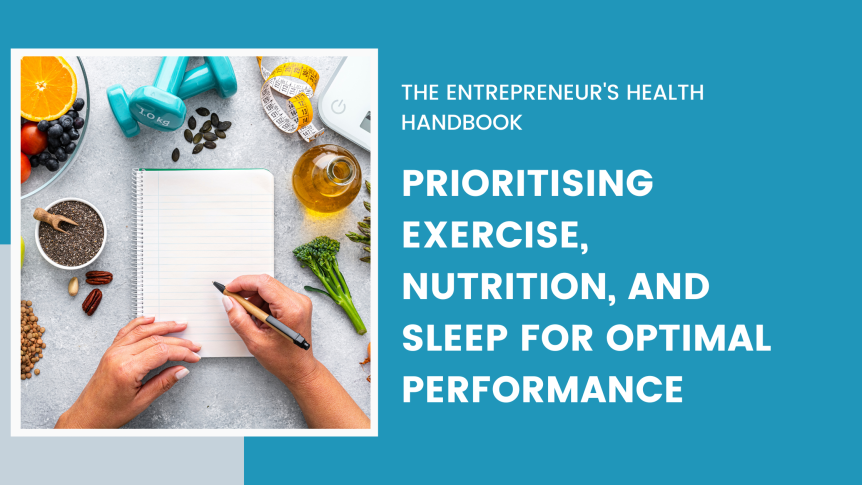
There is a conversation most business advisors avoid. It is uncomfortable, personal, and does not fit neatly into a spreadsheet or a strategic framework. It is about the physical and psychological cost of building a business — and why neglecting it is one of the most expensive mistakes an entrepreneur can make.
In twenty-five years of consulting with over 2,000 businesses, I have watched brilliant founders destroy their companies — and their health — because they treated their well-being as an afterthought. I have seen promising businesses collapse under founder burnout. I have watched leaders make increasingly poor decisions as accumulated stress eroded their judgment. And I have seen talented people become shadows of themselves because they believed that rest, recovery, and balance were luxuries they could not afford.
Here is the uncomfortable truth: you cannot afford not to prioritise them.
According to a study by the UK’s Centre for Entrepreneurs, 80% of entrepreneurs reported experiencing stress, anxiety, or depression at some point in their careers, with many citing poor physical health as a contributing factor. The Federation of Small Businesses has estimated that poor health and well-being cost UK small businesses £3.6 billion annually in lost productivity and absence. The Mental Health Foundation reports that nearly three-quarters of entrepreneurs experience stress or anxiety regularly, with one in three saying running their business has hurt their mental health.
These are not soft statistics. They have hard business consequences.
This handbook brings together everything I have learned — from my own experience, from working with thousands of clients, and from the research — about how entrepreneurs can protect and build their physical and mental health. It covers five interconnected areas: exercise, nutrition, sleep, stress management, and work-life balance. Each section is practical and actionable. None of it is aspirational filler.
Your health is not separate from your business performance. It is the foundation of it.
What This Handbook Covers
- Why entrepreneur health is a business-critical issue, not a lifestyle preference
- The science of exercise and its specific impact on cognitive and emotional performance
- Nutrition strategies designed for the demands of entrepreneurial life
- Why sleep is your highest-leverage health investment and how to protect it
- The specific stressors entrepreneurs face and the evidence-based techniques that address them
- A practical framework for work-life balance that works in the real world
- UK resources and support networks for entrepreneurs
Part One: Exercise — Your Most Powerful Performance Tool
Exercise is one of the most powerful tools in an entrepreneur’s health toolkit, and it is consistently the first to be sacrificed when business pressure intensifies. That is exactly the wrong trade-off.
Why Exercise Matters More for Entrepreneurs Than Most People
When you exercise, your heart rate increases and blood vessels dilate, allowing more oxygen and nutrients to reach your brain. This increased blood flow directly improves cognitive function — memory, attention, and decision-making — the precise capabilities an entrepreneur depends on most. Exercise also stimulates the release of dopamine, serotonin, and brain-derived neurotrophic factor (BDNF), chemicals that regulate mood, motivation, and cognitive resilience. And it releases endorphins, which reduce anxiety and depression and improve sleep quality.
The NHS recommends at least 150 minutes of moderate-intensity activity per week for adults. The research on what regular exercise does for mental performance is unambiguous: it improves the precise capabilities — focus, decision quality, stress resilience, creative thinking — that entrepreneurship demands most.
I have seen this play out in client after client. Founders who maintain consistent physical activity, even if imperfect, make better decisions under pressure. They recover faster from setbacks. They bring more creative energy to problems. The ones who sacrifice exercise to work more hours tend to see diminishing returns on those extra hours within weeks.
The Specific Challenges Entrepreneurs Face with Exercise
The demands of running a business create real barriers to physical activity — I am not dismissing them. Long and unpredictable hours, the passive nature of much entrepreneurial work (screen time, calls, planning), and the psychological difficulty of stepping away from an urgent feeling business all conspire against consistent exercise habits.
The solution is not to try harder to find willpower. It is to approach exercise strategically and structurally, the same way you would approach any operational challenge in your business.
Practical Strategies for Making Exercise Consistent
Schedule it as a non-negotiable commitment. Block exercise in your calendar exactly as you would a client meeting or investor call. Treat it as an appointment that cannot be moved without a significant reason. Early morning tends to work best for most entrepreneurs — it happens before the day’s unpredictability can crowd it out.
Find movement that fits your lifestyle, not your aspirations. You do not need a gym membership or a structured training programme. Walking meetings instead of sitting at a desk, a standing desk for part of the day, a lunchtime run or cycle, a bodyweight circuit at home — what matters is consistency over intensity. A 30-minute walk every day beats an ambitious gym programme you abandon after three weeks.
Use social accountability. Join a fitness class, find a training partner, or commit to a running club. The social element does two things: it makes exercise more enjoyable, and it creates external accountability that is often more reliable than internal motivation when you are tired and stressed.
Set measurable goals. Whether that is steps per day, workouts per week, or a specific event you are training towards, having a clear target helps maintain focus when motivation dips.
Track your progress. Many founders find that quantifying their activity — through an app or a wearable — creates a feedback loop that sustains the habit. What gets measured gets managed, even with exercise.
Part Two: Nutrition — Fuelling Your Performance
The foods you eat are the fuel your brain and body run on. A well-balanced diet has a direct and measurable impact on cognitive function, energy levels, mood stability, and long-term health. For entrepreneurs whose performance depends on sustained mental clarity and emotional regulation, nutrition is not a lifestyle topic — it is a performance issue.
The Cognitive Case for Better Nutrition
The brain is highly metabolically active. It requires a constant supply of glucose and specific nutrients to function properly. Research consistently shows that a diet rich in fruits, vegetables, whole grains, and lean proteins improves memory, attention, and overall cognitive performance. Conversely, a diet high in processed foods, sugar, and unhealthy fats is associated with increased risk of mood disorders, poor decision quality, and cognitive decline.
Specific nutrients have direct links to mental health outcomes that matter for entrepreneurs. Omega-3 fatty acids support brain function and are linked to reduced rates of depression and anxiety. B vitamins are essential for energy metabolism and nervous system function. Vitamin D deficiency — common in the UK given our climate — is associated with low mood, fatigue, and impaired concentration. Many entrepreneurs are deficient in one or more of these without knowing it.
The Specific Challenges Entrepreneurs Face with Nutrition
Long hours leave little time for meal planning or preparation. Stress and emotional pressure create strong pulls towards convenience food, sugary snacks, and caffeine. Many entrepreneurs eat at their desks, rushing through meals in ways that impair digestion and make it harder to notice genuine hunger and fullness signals. And the culture of entrepreneurship — the all-nighter, the working lunch, the skipped breakfast — actively normalises poor nutritional habits.
The solution is not a dramatic dietary overhaul. Small, sustainable changes compound significantly over time.
Practical Nutrition Strategies for Entrepreneurs
Protect breakfast. Starting the day with a balanced meal — combining protein, healthy fats, and complex carbohydrates — stabilises blood sugar and supports sustained cognitive performance throughout the morning. Eggs with avocado on wholegrain toast, overnight oats with nuts and seeds, or a protein-rich smoothie with fruit all work well. Skipping breakfast or replacing it with a high-sugar coffee drink creates energy peaks and crashes that impair afternoon productivity.
Batch prepare and plan ahead. The biggest barrier to healthy eating for most entrepreneurs is time and decision fatigue. Spending two hours on a Sunday preparing meals for the week — or even just chopping vegetables and cooking grains in advance — dramatically reduces the friction of eating well during a busy week. Having healthy options ready to reach for removes the moment of temptation when you are hungry and time-pressed.
Keep smart snacks accessible. Fresh fruit, a handful of mixed nuts, cut vegetables with hummus, a piece of dark chocolate — having these readily available means that when hunger strikes between tasks, your default option is genuinely nourishing rather than empty calories from whatever is nearest.
Hydrate consistently. Mild dehydration impairs cognitive performance, focus, and mood, and entrepreneurs frequently forget to drink enough water on busy days. Aim for at least eight glasses of water daily. Keep a water bottle at your desk and treat it as part of your workspace, not an afterthought.
Watch the caffeine pattern. A morning coffee is fine. Multiple coffees through the afternoon create anxiety, disrupt sleep, and generate the jittery energy that impairs precise thinking. Consider cutting caffeine off by early afternoon and see whether your sleep and late-day clarity improve — most people find they do.
Recognise emotional eating patterns. Many entrepreneurs use food to manage stress — either eating compulsively when anxious or skipping meals when overwhelmed. Developing awareness of these patterns, and having alternative coping mechanisms (a short walk, five minutes of deep breathing, calling a friend), reduces the emotional pull of food and supports more consistent habits.
Part Three: Sleep — The Non-Negotiable Foundation
Sleep is the most consistently sacrificed element of entrepreneur health, and the most consequential. The culture of entrepreneurship actively celebrates sleep deprivation as a badge of commitment. This is not just misguided — it is actively counterproductive.
What Sleep Deprivation Actually Does to Your Performance
Sleep is a complex biological process involving multiple stages, each serving specific restoration and consolidation functions. During sleep, your body repairs muscle tissue, regulates hormones, and consolidates memory — transferring experiences from short-term to long-term storage and integrating new information with existing knowledge.
The cognitive effects of even mild sleep deprivation are significant and well-documented. Attention, working memory, and decision-making quality all deteriorate measurably after a single night of insufficient sleep. Chronic sleep deprivation — which many entrepreneurs experience for extended periods — is linked to substantially increased rates of anxiety and depression, impaired emotional regulation, increased risk of poor decisions, and reduced creativity. It also increases the risk of serious physical health conditions, including obesity, type 2 diabetes, and cardiovascular disease.
Put simply, an entrepreneur operating on five or six hours of sleep per night is not performing at 70% of their capacity. They are performing at a significantly lower fraction than that, with impaired ability to recognise the impairment — because sleep deprivation compromises your ability to accurately self-assess your own cognitive state.
The research consistently points to 7-9 hours per night as optimal for adult performance. This is not a guideline you can override with enough coffee and ambition.
Practical Strategies for Protecting Your Sleep
Establish a consistent sleep schedule. Going to bed and waking up at the same time each day, including weekends, is the single most effective intervention for sleep quality. Your circadian rhythm operates most efficiently when it can predict your schedule. Irregular sleep timing fragments the cycle and reduces time in the deep, restorative stages.
Create a wind-down routine. Your brain needs a transition period between high-stimulus work mode and sleep. A wind-down routine of 30 to 60 minutes, consistent each evening, signals that transition. This could include reading a physical book, a warm bath or shower, light stretching, or a brief meditation practice. What it should not include is screens, work email, or any material that activates problem-solving thinking.
Optimise your sleep environment. Your bedroom should be cool (around 16-18 degrees Celsius is optimal for most people), dark, and quiet. A comfortable mattress and pillow that suit your sleeping position are worth the investment. Even small improvements to your sleep environment — blackout curtains, a white-noise machine if you live in a noisy area, keeping your phone out of the bedroom — compound into meaningfully better sleep over time.
Address caffeine and alcohol. Caffeine has a half-life of approximately five to six hours, meaning a 3pm coffee still has half its stimulant effect at 8pm. Avoid caffeine after early afternoon. Alcohol is similarly misunderstood — while it may help you fall asleep faster, it suppresses REM sleep, increases sleep fragmentation, and typically results in early morning waking and poor-quality rest overall.
Separate work from your bedroom. If you work from home, this is particularly important. The bedroom should be associated with sleep and rest, not with work. Using it as a home office, even occasionally, creates an associative link that makes it harder for your brain to shift into sleep mode when you go to bed.
Take sleep deprivation seriously. If you consistently wake unrefreshed, struggle to concentrate, or find yourself nodding off during the day, these are signs that your sleep is insufficient or insufficiently restorative. Speaking to your GP is the right response — not pushing through with more caffeine.
Part Four: Stress Management — A Chapter for Entrepreneurs Who Think They Are Fine
Here is something I have noticed consistently in my consulting work: the entrepreneurs who most need to address their stress are usually the least likely to identify it as a problem. They are used to operating under pressure. They have normalised the anxiety. They interpret chronic stress as the price of ambition rather than a signal that something needs to change.
The consequences of that normalisation are measurable. Founders operating under sustained high stress show, on average, 35% higher employee turnover, 28% lower customer satisfaction, and significantly more frequent strategic pivots that fail to deliver results. Stress does not just affect the founder — it propagates through the business.
Understanding Entrepreneurial Stress: The Specific Causes
Entrepreneurial stress has distinctive characteristics that distinguish it from stress experienced in employed work. Understanding these helps in addressing them more precisely.
Financial pressure. The uncertainty of cash flow, the personal financial exposure many entrepreneurs carry, and the weight of responsibility for employees’ livelihoods create a persistent background level of financial anxiety that employed workers rarely experience. The Federation of Small Businesses consistently identifies cash flow issues and late payments as the top sources of stress for small business owners.
Decision fatigue. Entrepreneurs make a disproportionate number of decisions — often 90 or more per working day — across every function of their business. Over time, this erodes mental clarity and increases the likelihood of poor decisions, reactive choices, and avoidance of decisions that should be made.
Work-life imbalance. When there is no clear boundary between work time and personal time, the nervous system never fully deactivates its stress response. Chronic low-level stress accumulates in a way that periodic high stress followed by genuine recovery does not.
Isolation and loneliness. The Mental Health Foundation found that 30% of UK entrepreneurs often or always feel lonely. Entrepreneurship places a great deal of responsibility on one person, and the demands of building a business often crowd out the social connections that provide natural stress-buffering.
The “always on” pressure. Digital connectivity has removed the natural off-switch that previous generations of business owners had. The expectation — often self-imposed — of constant availability creates a state of chronic activation that prevents genuine recovery.
Practical Stress Management Techniques That Work
Mindfulness and meditation. The evidence base for mindfulness as a stress management tool is now substantial. An Oxford University study found that participants in an online mindfulness course reported a 58% reduction in anxiety and a 40% reduction in stress. For entrepreneurs sceptical of anything that sounds soft or spiritual, the mechanism is straightforward: mindfulness training improves your ability to notice your own stress response before it escalates, giving you more agency over how you respond to pressure. Start with five minutes of guided breathing daily using an app like Headspace, Calm, or Insight Timer. Build from there.
The Eisenhower Matrix for decision fatigue. Dividing tasks into four categories — urgent and important, important but not urgent, urgent but not important, and neither — and committing to focus on the first category while systematically delegating or eliminating the third and fourth directly addresses one of the most common sources of entrepreneur stress: the feeling of being permanently overwhelmed by competing demands. Most entrepreneurs spend too much time on urgent but not important tasks and not enough on important but not urgent work that actually builds the business.
Physical activity as a stress intervention. The exercise strategies in Part One are directly applicable here. Exercise is one of the most effective evidence-based stress management tools available, and it works through multiple mechanisms simultaneously — endorphin release, cortisol metabolism, improved sleep, and the psychological benefits of a clear, non-work activity with measurable progress.
Social support and peer connection. Building a strong support network of people who understand the entrepreneurial experience is not a luxury — it is a stress-management strategy. This might mean joining an entrepreneur peer group, finding a mentor who has experienced similar challenges, attending industry events regularly, or simply scheduling non-cancellable time with friends and family. The Federation of Small Businesses, the Entrepreneurs’ Organisation, and sector-specific business networks all provide access to communities of people who understand what you are experiencing.
Structured time away from work. Not a holiday, necessarily — although that matters too — but daily and weekly recovery periods that are protected and predictable. A consistent end time to the working day. A screen-free Sunday morning. Regular exercise that takes you fully out of work mode. These structured recovery periods prevent the accumulation of stress that leads to burnout.
Seeking professional support. If stress has crossed into persistent anxiety, depression, or burnout, speaking to a GP or mental health professional is the appropriate response — not pushing through. Mental health charities, including Mind (mind.org.uk) and the Mental Health Foundation, offer resources specifically relevant to entrepreneurs. There is no productive version of untreated clinical anxiety.
Part Five: Work-Life Balance — Reframing the Goal
The phrase “work-life balance” is widely used and widely misunderstood. It implies a static equilibrium — equal weights on both sides of a scale — that does not reflect the reality of entrepreneurial life. There will be seasons of intensive work. There will be periods of relative calm. Balance is not a fixed point; it is an ongoing practice of intentional management.
What the research consistently shows is that the entrepreneurs who achieve genuine long-term success — sustained over years rather than in a single intense sprint — are those who create sustainable operating conditions for themselves. That means boundaries, recovery, and personal fulfilment outside the business.
The data is unambiguous on the costs of imbalance. The Mental Health Foundation found that 45% of UK entrepreneurs have experienced depression, anxiety, or other mental health problems, with work-life imbalance as a significant contributing factor. The Federation of Small Businesses found that 37% of small business owners work more than 50 hours per week, and 15% work more than 60 hours. This level of work is not sustainable, and the research is clear that productivity does not scale linearly with hours — beyond a threshold, additional hours yield diminishing and eventually negative returns.
The Business Case for Work-Life Balance
It is worth making this argument explicitly, because many entrepreneurs will only change their behaviour when they understand the business logic.
When you are well-rested, physically active, and fulfilled in your personal life, you bring better cognitive performance to your work. The University of Warwick found that happy, well-rested employees are 12% more productive than their stressed, depleted counterparts — and the effect is likely larger for founders, where poor decision-making carries greater consequences. You also model sustainable working patterns for your team, which directly affects employee retention and culture.
Moreover, the creative breakthroughs that drive business growth rarely emerge from grinding. They tend to come from periods of rest, exposure to new experiences, and engagement with interests outside the business, which is why protecting personal time is not selfish. It is a genuine investment in your business’s capacity for innovation.
Practical Strategies for Achieving Real Work-Life Balance
Establish clear work hours and defend them. Set a consistent start and end time for your working day. Communicate these boundaries clearly to your team, your clients, and your family. This does not mean you will never work in the evening or at the weekend — sometimes you will — but it creates a default structure that limits the extent to which work colonises personal time.
Learn to say no systematically. Every yes to a non-essential commitment is a no to something that actually matters. Many entrepreneurs struggle with this because they see every opportunity as potentially important. The discipline is in recognising that your attention and energy are finite resources that must be allocated strategically, exactly as you would allocate capital.
Delegate with genuine intent. Delegation is not just giving someone else a task while remaining available to second-guess every decision. Real delegation means transferring ownership, providing the context and tools the person needs to succeed, and then genuinely stepping back. For many founders, this requires working through the psychological challenge of relinquishing control — but it is essential both for your own capacity and for your team’s development.
Create a dedicated workspace. If you work from home, physical separation between your workspace and your personal space matters enormously for your ability to switch off. A dedicated room is ideal. If that is not possible, consistent rituals that mark the start and end of work — a specific piece of music, a short walk, a deliberate shutdown routine — can serve the same psychological function.
Make personal time genuinely restorative. It is not enough to stop working. The time you reclaim needs to actually restore you. Exercise, social connection, creative pursuits, time in nature, engaging hobbies — these activities provide the cognitive and emotional recovery that passive screen consumption does not. Be intentional about how you use personal time, with the same energy you apply to business planning.
Align your business with what actually matters to you. The deepest source of work-life balance for entrepreneurs is not time management—it is building a business that reflects your values and serves a purpose you care about. According to the Institute of Directors, 63 per cent of UK entrepreneurs started their businesses to pursue a personal passion or interest. When you have that connection, work feels different. It still requires boundaries and recovery, but the character of your engagement with it changes.
Integrate personal passions rather than treating them as rewards. Many entrepreneurs defer personal interests indefinitely — “once the business is stable” or “when I have more time.” Those moments rarely arrive on their own. Pursuing creative hobbies, maintaining relationships, and engaging with interests outside work should be treated as current priorities, not future ones.
The Entrepreneur Wellbeing Self-Assessment
Use this brief checklist monthly. It is not a diagnostic tool — it is a prompt to notice what you might be ignoring.
Physical health. Am I consistently sleeping 7 to 9 hours? Am I exercising at least 150 minutes per week? Am I eating balanced meals regularly rather than subsisting on caffeine and convenience food? Am I attending my regular health appointments (GP, dentist)?
Mental and emotional health. Am I managing stress through deliberate practices rather than just absorbing it? Do I have at least one person I can speak to honestly about the pressures I face? Am I aware of the early warning signs of anxiety or depression in myself?
Boundaries and recovery. Do I have consistent working hours that I generally respect? Do I have non-negotiable personal time that work does not intrude on? When I take time off, do I genuinely switch off?
Personal fulfilment. Am I engaging regularly in activities that have nothing to do with the business? Am I maintaining relationships that matter to me? Do I have a sense of purpose that extends beyond the success of my company?
Consistent “no” answers in any category are signals worth acting on, not dismissing.
UK Resources for Entrepreneur Wellbeing
Mental health support. Mind (mind.org.uk) provides information, advice, and local services for mental health. The Mental Health Foundation (mentalhealth.org.uk) offers evidence-based resources. Your GP is always the right first call for persistent symptoms of anxiety, depression, or burnout.
Business peer support. The Federation of Small Businesses (fsb.org.uk) and the Entrepreneurs’ Organisation (eonetwork.org) both offer community and support specifically for founders. Local Chambers of Commerce often run peer groups and mentoring programmes.
Physical health. The NHS provides clear guidance on exercise, nutrition, and sleep through nhs.uk. Most GP practices offer lifestyle advice and can refer to specialist services where needed.
Business mentoring. At SGI Consultants, our business mentoring service works with founders on the full picture of sustainable business building — including the leadership and wellbeing dimensions that often get overlooked in purely strategic conversations.
A Final Note
In my years of working with founders, I have never met one who regretted investing in their health and well-being. I have met many who regretted not doing so sooner.
The skills you bring to your business — strategic thinking, resilience, creativity, decision quality — are all directly dependent on your physical and mental state. When you neglect your health, you are not just compromising yourself. You are compromising the most important asset your business has.
Start where you are. Make one change this week — protect an hour of sleep, take a walk at lunchtime, say no to one non-essential commitment. Small, consistent changes compound into different outcomes. The version of you that performs at your best is not separate from the person who looks after themselves. It is the same person.
Frequently Asked Questions
Is it really possible to maintain good health while building a startup?
Yes — and more importantly, it is necessary. The founders I have worked with who treat health as a genuine priority rather than a future intention consistently perform better and sustain their performance longer than those who sacrifice it. The key is approaching health habits with the same systematic thinking you apply to your business: small, consistent actions that build over time, rather than periodic bursts of intense effort.
I do not have time to exercise for an hour every day. What is actually realistic?
Thirty minutes of moderate exercise on most days is sufficient to generate meaningful cognitive and physical health benefits. Walking counts. A home bodyweight circuit counts. The NHS guideline of 150 minutes per week, spread across several days, is achievable by most people when they treat it as a non-negotiable commitment rather than something to fit in when time allows. Start with fifteen minutes and build gradually.
How do I know if I am burning out rather than just going through a busy period?
The distinction matters. A busy period is time-bounded and followed by genuine recovery. Burnout is characterised by persistent exhaustion that does not improve with rest, increasing cynicism or detachment about your work, and declining performance despite working the same or more hours. If you recognise those patterns lasting more than a few weeks, speak to a GP. Early intervention is significantly easier than recovering from full burnout.
Should entrepreneurs seek therapy or counselling?
Many of the most effective founders I know do. The idea that seeking support is a sign of weakness is a damaging myth in entrepreneurial culture. Therapy, coaching, and peer support are tools that improve performance — they are not admissions of failure. If you are experiencing persistent anxiety, depression, or difficulty coping, therapy is appropriate and effective. If you simply want external perspective and accountability on how you are performing as a leader, business coaching serves that function.
What is the single most important change I could make to my health as an entrepreneur?
Sleep. If you are consistently getting fewer than seven hours, improving your sleep will have the most immediate and measurable impact on every other aspect of your performance — cognitive clarity, stress resilience, emotional regulation, physical energy, and creativity. Everything else in this handbook works better on a foundation of adequate sleep.
Related Posts

Kurt Graver is the founder and CEO of SGI Consultants, a business consultancy that has helped over 2,000 entrepreneurs establish successful startups using systematic business development methodologies. An accountant with an MBA and 25 years of commerce and consultancy experience, Kurt specialises in strategic planning, market analysis, and sustainable business growth